Fence Services in Roy, Utah
1. Hero and Direct Answer
Fence services cover the property-line work that determines how your yard functions day to day — privacy screening, pet containment, security, wind protection, and the boundary definition that separates your property from everything around it. Cornerstone Custom Construction & Remodeling has over 15 years of experience building and repairing residential fences across Northern Utah, working with wood, vinyl, and chain link systems sized and set for the conditions they actually face along the Wasatch Front.
Whether you need a full perimeter installation on a new lot, a targeted replacement of a failing section, or a gate repair that restores everyday access, this page covers what fence work involves, how the scope is determined, and what to expect before your project starts.
Call us at 801-389-3161 or email info@cornerstoneconstructionremodeling.com to start a free estimate conversation.
2. Who This Service Fits
Fence services are for homeowners who need new fence installation, section replacement, material upgrades, or gate repair — and who want a contractor that handles the full scope from layout and post setting through final hardware and cleanup.
This work fits you if:
(i) You need a new fence installed around part or all of the yard — for privacy, pets, children, security, or property definition. (ii) An existing fence has reached the end of its useful life and needs full or partial replacement rather than another round of temporary repairs. (iii) A gate is sagging, dragging, misaligned, or no longer latching, and the repair requires more than a hinge adjustment. (iv) You are comparing materials — wood, vinyl, or chain link — and want guidance on which system fits the property, the purpose, and the maintenance level you are willing to manage. (v) A remodeling, construction, or exterior project requires fence removal and reinstallation as part of a larger scope.
Cornerstone operates as the fence contractor — handling layout, post work, panel and rail installation, gate construction, and finish details. We coordinate with utility locators and work around existing landscaping, hardscape, and structures. Engineering assessments, land surveys, and HOA architectural approvals are the homeowner's responsibility, though we can help identify when those steps apply to your project.
Browse the full Exterior and Outdoor Services category if your project involves other outdoor work alongside the fence.
3. Scope, Exclusions, and Representative Conditions
What fence services include:
(i) New fence installation — full perimeter runs, partial boundary sections, side-yard screening, and backyard enclosures using wood, vinyl, or chain link systems. (ii) Fence replacement — removing a deteriorated or damaged fence and installing a new system on the same line or an adjusted layout. (iii) Section and post repair — replacing leaning, broken, or frost-heaved posts and rebuilding damaged sections without replacing the entire run. (iv) Gate construction and repair — new gate builds sized to the fence system, plus hardware replacement, re-squaring, re-hanging, and latch correction on existing gates. (v) Old fence removal — demolition and haul-off of the existing fence, including concrete footing extraction when new posts need different placement. (vi) Post setting with proper depth and footing — concrete-set or compacted-gravel posts sized for the material system, height, and local frost-line depth.
What falls outside the fence scope:
(i) Licensed land surveys and property-line certification — we install to the line you establish, but confirming the legal boundary is the homeowner's responsibility. (ii) HOA architectural review and approval — required in many Northern Utah subdivisions before installation can begin. (iii) Retaining walls and grade-change structures — when the fence line crosses significant elevation changes, the retaining work is a separate scope. See retaining wall services for that path. (iv) Electrical work for gate openers, lighting, or powered access systems.
Conditions that shape residential fence projects along the Wasatch Front:
The same soil and weather patterns that affect every exterior project in Northern Utah show up clearly in fence work. Lake Bonneville clay expands when wet and contracts when dry, and that movement works against fence posts — especially posts set too shallow or without proper drainage stone beneath the footing. The 30-inch frost line across Davis, Weber, and Salt Lake counties means post holes need to reach at least that depth to avoid frost heave, which can lift concrete footings and tilt panels over a single winter season. Rocky alluvium on bench and foothill properties can require mechanical post-hole drilling where hand augers will not penetrate. Wind exposure varies block to block along the Wasatch Front, and privacy fences in open or elevated positions take significantly more lateral load than the same fence in a sheltered backyard.
4. Scope Options Within Fence Services
Fence services include five focused paths. Each one handles a specific material or repair scope, and you can open the detailed page to see what that path covers before starting an estimate.
4.1 Chain Link Fence Installation
Chain link is the most economical perimeter option and the most common choice when the priority is containment, boundary definition, or visibility rather than privacy screening. Chain link handles pet enclosures, side-yard runs, utility areas, and full-perimeter installations where durability and budget matter more than appearance. Vinyl-coated options add color and corrosion resistance. Privacy slats can be added for partial screening where needed.
4.2 Gate Repair
Gate repair addresses the access point — the part of the fence that moves, carries hardware, and takes the most daily wear. Common gate problems include sagging from hinge failure, dragging on grade that has shifted, latch mechanisms that no longer align, and post lean that pulls the gate out of square. Gate repair can sometimes be handled as a standalone visit without touching the rest of the fence line.
4.3 Privacy Fence Installation
Privacy fencing is built for screening — solid panels or tight board spacing that blocks sightlines from neighboring properties, streets, or commercial areas. Privacy installations are the most common fence request for backyard enclosures in Northern Utah subdivisions. Height, board orientation, and cap-rail details all affect how much privacy the fence actually delivers once installed.
Vinyl delivers a clean, uniform appearance with significantly less maintenance than wood. It does not require staining, sealing, or painting, and it resists rot, insect damage, and surface weathering. Vinyl comes in privacy, semi-privacy, and picket configurations. The material costs more upfront than wood but eliminates recurring maintenance expense over the life of the fence.
Wood is the most versatile fence material and the most customizable. Cedar and pressure-treated lumber are the most common species in Northern Utah installations. Wood allows custom heights, board patterns, cap-rail profiles, and stain colors that vinyl and chain link cannot match. The tradeoff is maintenance — wood fences need periodic staining or sealing to manage moisture, UV exposure, and the shrink-swell movement that comes with Utah's dry summers and wet springs.
5. Planning Inputs and Site Factors
Before a fence estimate can be accurate, several site-specific inputs need to be established:
Property and boundary information. The fence line follows the property boundary, and the homeowner is responsible for knowing where that boundary is. If a recent survey exists, share it. If the boundary is uncertain, a licensed surveyor should mark the corners before layout begins. Installing a fence on a neighbor's property creates disputes that are far more expensive to resolve than a survey.
Purpose and priority. A fence built for privacy is designed differently than one built for pet containment, and both differ from one built primarily for wind screening or appearance. The purpose determines material, height, board spacing, gate count, and post sizing.
Gate count, size, and location. Every gate adds cost and requires heavier post framing than a standard line post. Double gates for equipment or vehicle access need even more reinforcement. Gate locations should be planned around how you actually use the yard — not just where the old gate happened to be.
Material preference. Wood, vinyl, and chain link each have different cost structures, maintenance demands, and appearance profiles. If you are undecided, the estimate conversation is the right place to compare options against your property and budget.
Existing fence condition. If old fencing is being replaced, the removal scope — including concrete footing extraction, post pulling, and haul-off — becomes part of the project. Some existing posts can be reused if they are still plumb, structurally sound, and at proper depth. Most cannot.
HOA and local requirements. Many subdivisions in Davis, Weber, and Salt Lake counties have architectural guidelines that restrict material, height, color, and placement. Confirm these restrictions before selecting materials. Municipal zoning codes may also set maximum height limits and required setbacks from property lines — requirements that vary by city within the service area.
Utility marking. Utah law requires a Blue Stakes 811 utility locate at least three business days before any digging begins. Post holes along the fence line can intersect buried gas, water, electric, cable, and irrigation lines, and those locations must be marked and cleared before post setting starts.
6. Cost and Schedule Factors
Fence projects vary in cost based on several measurable factors. We do not quote prices on this page because every property is different, but understanding what drives the estimate helps you evaluate scope and compare quotes with confidence.
Linear footage. Total fence length is the most direct cost driver. A 200-foot perimeter costs more than an 80-foot backyard run, and the relationship is roughly proportional for the same material and height.
Material system. Chain link is the most economical. Wood falls in the middle and varies with species and grade — construction-grade pressure-treated lumber costs less than select-grade cedar. Vinyl has the highest material cost but eliminates ongoing stain and seal expense.
Height. A six-foot privacy fence uses more material, requires deeper posts, and takes more labor than a four-foot boundary fence in the same material.
Gate count and size. Every gate requires heavier posts, additional hardware, and more precise framing. Double or wide-access gates cost more than standard walk-through gates.
Terrain and soil. Sloped yards require stepped or racked panels and more post-setting labor. Rocky soil on bench properties increases drilling time. Clay-heavy lots in the valley floor may need drainage stone adjustments beneath footings.
Old fence removal. Demolishing and hauling off an existing fence — especially one with concrete footings — adds to the project before new installation begins. The removal scope depends on the material, condition, and footing type of the old fence.
Access constraints. Tight side yards, existing landscaping, retaining walls, or structures close to the fence line can limit equipment access and slow installation.
Projects that also involve concrete work for adjacent flatwork, deck construction, or retaining walls can sometimes be combined for more efficient scheduling and site coordination.
7. Process, Sequencing, and Responsibility Boundaries
A typical fence installation follows a predictable sequence. The specifics adjust based on material, terrain, and site conditions, but the phases stay consistent.
Step 1 — Site visit and layout. We walk the fence line with you to confirm the run, mark gate locations, identify terrain challenges, note access constraints, and discuss material options. If a property survey exists, we reference it for boundary placement. If not, we recommend confirming the boundary before installation begins.
Step 2 — Utility locate. A Blue Stakes 811 request is submitted at least three business days before digging. Marked utility locations are confirmed and the post layout is adjusted if any lines fall in the path. Markings are valid for fourteen calendar days.
Step 3 — Old fence removal (when applicable). Existing fencing is demolished, posts are pulled or cut, concrete footings are extracted where new post locations require it, and debris is hauled off. The line is cleared and ready for new layout.
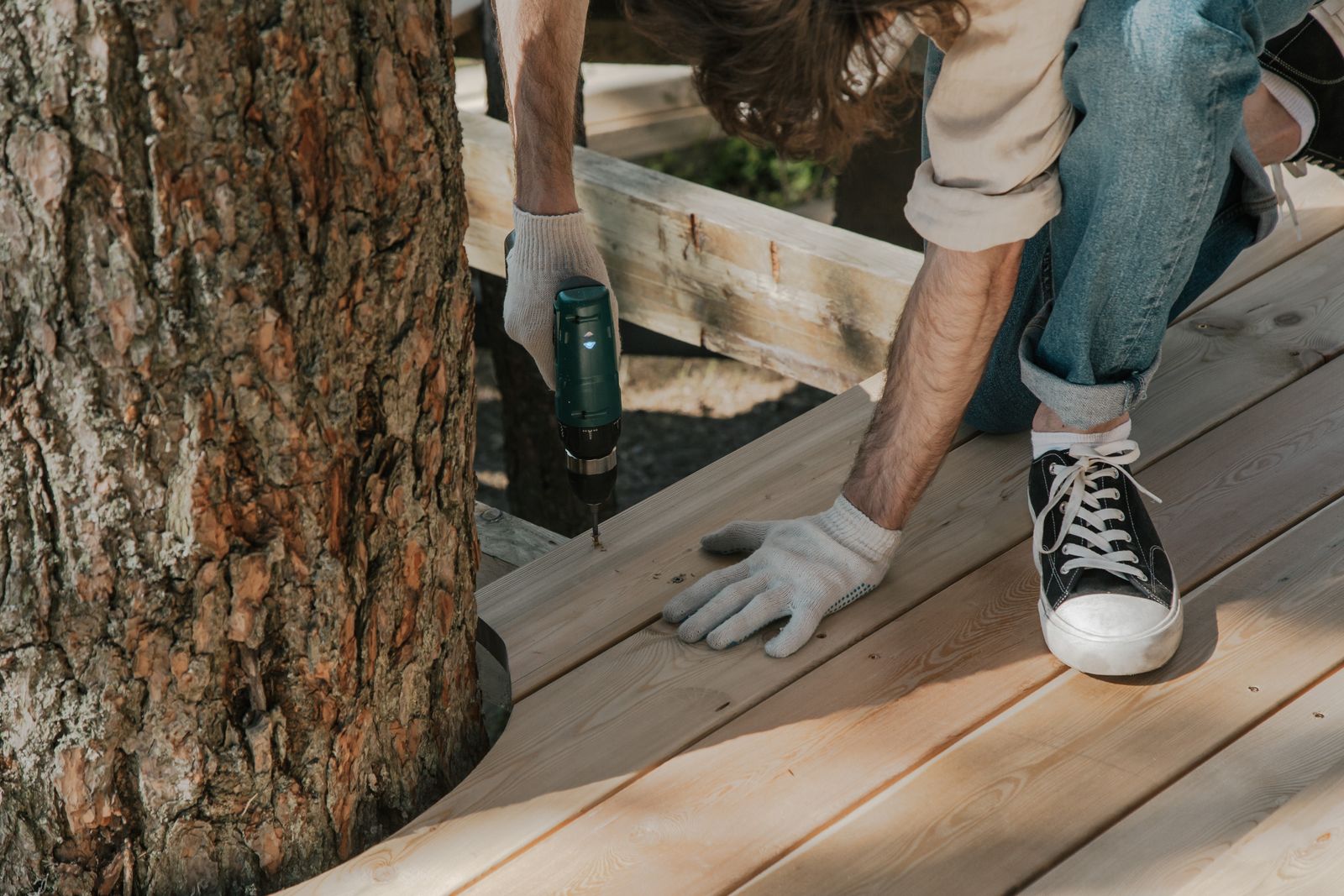
Step 4 — Post hole drilling and post setting. Holes are drilled to the required depth — at minimum 30 inches along the Wasatch Front to clear the frost line, deeper on sloped or exposed sections. Drainage gravel is placed at the bottom of each hole. Posts are set plumb and secured with concrete or compacted gravel depending on the material system and soil conditions. Corner posts, end posts, and gate posts receive heavier treatment than line posts.
Step 5 — Rail and panel installation. Horizontal rails are attached between posts, then panels, pickets, or mesh are secured to the rail framework. For wood fences, boards are fastened with galvanized or stainless-steel fasteners to prevent corrosion staining. For vinyl, pre-assembled panels are seated into routed posts. For chain link, fabric is stretched and tied to the rail framework with tension bands and ties.
Step 6 — Gate installation and hardware. Gates are built or hung to match the fence system, squared to the opening, and fitted with latches, hinges, and any requested hardware. Gate swing is confirmed for clearance over grade.
Step 7 — Cleanup and walkthrough. Spoil from post holes is removed or graded, disturbed areas are raked, and the completed fence is walked with the homeowner to confirm alignment, operation, and finish.
Cornerstone handles the full installation sequence — from post setting through final hardware. Licensed electrical connections for automated gate openers, land surveying, and HOA approval processes are the homeowner's responsibility. We help identify when those steps are needed and can coordinate scheduling around them.
8. Service Area
Fence services are available throughout Davis, Weber, and Salt Lake counties, including Roy, Ogden, Layton, Kaysville, Clearfield, Syracuse, Clinton, South Ogden, North Ogden, Bountiful, Centerville, Farmington, West Point, Sandy, Draper, Murray, Midvale, and surrounding communities.
Projects elsewhere in Utah are considered when the scope and project economics fit. Visit the Roy service area page for a closer look at local coverage.
9. Related Services
Fence work often connects to other exterior and property-improvement projects. These related paths may apply to your situation:
Within Exterior and Outdoor Services:
(i) Deck and Patio Services — outdoor living spaces that often share a fence line or border the fenced yard area. (ii) Deck Services — new deck construction or replacement that may require temporary fence removal and reinstallation. (iii) Concrete Services — flatwork, walkways, and pads that may run along or connect to the fence line. (iv) Retaining Wall Services — grade-change structures that interact with fence layout on sloped properties. (v) Asphalt and Paving Services — driveway and hardscape work that borders or crosses the fence perimeter. (vi) Gutter Services — downspout discharge routing that can affect drainage near fence footings. (vii) Siding Services — exterior envelope work that may require temporary fence section removal for access. (viii) Roofing — roof replacement projects that need clear access along the fence line for staging and material delivery. (ix) Window and Door Services — exterior access projects that may coordinate with fence gate placement. (x) Masonry Services — brick or stone columns and pilasters that integrate with fence panel runs. (xi) Irrigation and Sprinkler Services — sprinkler lines that cross the fence path and must be located before post holes are drilled. (xii) Chimney and Fireplace Services — outdoor fireplace projects that share the fenced yard area.
Other service families:
(i) All Services — return to the full services directory to compare other project types. (ii) Interior Remodeling and Finish Services — indoor projects that may be combined with exterior fence work. (iii) New Construction Projects — new builds that include fence installation as part of the construction scope. (iv) Restoration, Waterproofing and Structural Services — structural and water-management work that may affect the fence perimeter.
10. Frequently Asked Questions
What usually determines the best fence material for a yard? The choice comes down to what the fence needs to do and what you are willing to maintain. Privacy screening typically points to wood or vinyl in a solid-panel configuration. Pet containment and boundary definition can often be handled with chain link at a lower cost. Wood offers the most design flexibility — custom heights, board patterns, stain colors — but requires periodic staining or sealing every few years. Vinyl costs more upfront but needs no painting, staining, or sealing and resists rot and insect damage. Chain link is the most economical and durable option when visibility and airflow are acceptable. Wind exposure, yard grade, and neighborhood or HOA restrictions can also narrow the material options before preference enters the conversation.
Why does one fence quote differ so much from another? The gap usually means the quotes are not describing the same scope. Material grade is one of the biggest hidden variables — "cedar fence" can mean select-grade boards or construction-grade lumber, and vinyl panels vary in thickness, UV stabilization, and reinforcement. Post depth and footing method matter — a quote based on 24-inch post holes will look cheaper than one based on 30-inch holes below the frost line, but the shallow posts are more likely to heave in Northern Utah's freeze-thaw cycles. What is included also varies: some quotes cover old fence removal, concrete footing extraction, haul-off, utility marking coordination, and cleanup; others leave those as add-ons. Gate hardware, post caps, and finish details may or may not be itemized. The most reliable way to compare quotes is to ask each contractor to specify material grade, post depth, footing method, what is included in removal and cleanup, and whether the price covers everything through final walkthrough.
Do I need a permit to install a fence? Requirements vary by city within Davis, Weber, and Salt Lake counties. Many municipalities exempt standard residential fences under six or seven feet from a building permit, but zoning regulations may still control maximum height, setback from property lines, material restrictions, and corner-lot visibility. Some jurisdictions — and most HOAs — require an application or architectural review before installation can begin. We recommend checking with your local planning or building department and your HOA, if applicable, before finalizing the scope. We can help identify which requirements likely apply during the estimate visit.
How deep do fence posts need to be set? The standard rule is to bury at least one-third of the post's total length below grade. For a six-foot fence using an eight-foot post, that means roughly 32 inches in the ground. Along the Wasatch Front, the frost line sits at approximately 30 inches across Davis, Weber, and Salt Lake counties, so post holes must reach at least that depth to prevent frost heave — the upward force that displaces shallow footings during freeze-thaw cycles. Sloped sections, gate posts, corner posts, and end posts may need additional depth for stability. A layer of drainage gravel at the bottom of each hole helps prevent water from pooling beneath the footing.
Can a fence be installed on a slope? Yes. Sloped installations are handled by either stepping or racking the panels. Stepping means each panel is set level while the bottom edge follows the grade in uniform drops — this works well with vinyl and pre-built wood panels. Racking means the panel follows the slope angle continuously — this creates a smoother visual line but requires materials and hardware that adjust to the angle. The right approach depends on the material system, the steepness of the grade, and the visual result you prefer. Steeper slopes may also require post-hole adjustments and additional bracing.
What happens to sprinkler lines and utilities in the fence path? A Blue Stakes 811 utility locate is required by Utah law at least three business days before any digging begins. The locate marks buried gas, water, electric, cable, and communication lines along the fence path. Within two feet of any marked line, hand digging is required instead of mechanical drilling. Irrigation and sprinkler lines are typically not included in the 811 locate because they are privately owned — if you know or suspect sprinkler lines cross the fence path, let us know during the estimate so we can plan post placement to avoid them or coordinate repairs if a line must be relocated.
11. Start a Fence Estimate
If you are ready to discuss a new fence installation, a section replacement, a material upgrade, or a gate repair, the next step is a conversation about your property, your priorities, and the scope that fits.
(i) Call or text 801-389-3161 to describe the fence project and schedule a site visit. (ii) Email info@cornerstoneconstructionremodeling.com with photos of the fence line or damaged sections, approximate footage, material preference, and gate locations. (iii) Use the contact page to request a free estimate and include your address, the purpose of the fence, and any HOA or permit details you already have.
We typically respond to inquiries the same day during normal business availability.