Roofing in Davis, Weber, and Salt Lake Counties
A roof is a layered system. The visible shingles are the outermost surface, but the performance of the roof depends on what is underneath — the decking, underlayment, ice and water shield, flashing, ventilation, drip edge, and the connections at every penetration, valley, wall intersection, and edge. When any layer fails, water finds a path in, and the damage spreads from there.
Cornerstone Custom Construction & Remodeling handles roofing projects across Davis, Weber, and Salt Lake counties, with 15+ years of construction and roofing experience. Call or email to start a free estimate conversation.

Quick Answers
Who is this page for?
Homeowners evaluating a roof repair, replacement, or inspection. Builders or investors needing roofing as part of new construction or renovation. Property owners dealing with storm damage, active leaks, or aging roofs that are showing visible wear. Anyone comparing roofing contractors in the Davis, Weber, or Salt Lake County area.
What does the work usually include?
Roofing projects cover the full weather barrier above the structure — shingle or material installation, underlayment, ice and water shield, flashing at valleys, penetrations, chimneys, skylights, and roof-to-wall transitions, ventilation, ridge caps, drip edge, starter strips, pipe boots, and decking repair where needed. Scope varies by project: a focused repair addresses a specific failure point, while a full replacement involves tear-off, decking inspection, and reinstallation of every layer from the deck up.
What should you do next?
Call 801-389-3161 or email info@cornerstoneconstructionremodeling.com with your address, photos of the roof or problem areas, and a description of what you are seeing — leaks, missing shingles, storm damage, age-related wear, or any other symptoms. Include the roof's approximate age if you know it. That gives Cornerstone enough to confirm fit and move into the right estimate path.

Who This Service Fits
Roofing applies when the roof system needs attention — whether the issue is visible damage, a known leak, aging materials approaching the end of their service life, or a new construction project that needs roofing scope. Common starting points include:
- Active leaks showing up as ceiling stains, dripping, or water intrusion during rain or snowmelt
- Missing, lifted, cracked, or curling shingles visible from the ground or during gutter cleaning
- Granule loss on asphalt shingles — granules collecting in gutters or at downspout discharge points
- Storm damage from hail, wind, or fallen debris that affects shingles, flashing, or ridge caps
- An aging roof approaching or past 20 years where multiple areas are showing deterioration at the same time
- A new home or addition that needs roofing installed as part of the construction sequence
- A roof that has already been patched multiple times and the repairs are no longer holding
Cornerstone's requested role on a roofing project depends on the scope. Some jobs are a focused repair on an isolated failure. Others are full tear-off and replacement with decking work, flashing corrections, and ventilation upgrades. The scope, the requested role, and the responsibility boundaries are established during the estimate conversation — not assumed from a service name.
Scope, Exclusions, and Representative Project Conditions
What roofing typically covers:
- Shingle installation — asphalt, architectural, or other field material applied over properly prepared decking and underlayment
- Tear-off — removal of existing shingles, underlayment, and fasteners down to the decking surface for inspection and reinstallation
- Decking inspection and repair — identifying and replacing soft, delaminated, water-damaged, or rotted plywood or OSB before new material goes on
- Underlayment — synthetic felt or equivalent moisture barrier installed over the full deck surface
- Ice and water shield — self-adhering waterproof membrane installed at eaves, valleys, around penetrations, and on low-slope sections where ice dams or water pooling are risks
- Flashing — metal or composite material installed at valleys, chimneys, skylights, sidewalls, roof-to-wall intersections, pipe penetrations, and vent stacks to direct water away from joints and transitions
- Ventilation — intake vents at the eaves and exhaust vents at or near the ridge, working together to regulate heat and moisture in the attic space
- Ridge caps, drip edge, and starter strips — edge and ridge details that complete the system and prevent wind-driven rain and uplift at the most exposed points
- Pipe boots and penetration seals — waterproof collars and flashing around plumbing vents, exhaust fans, and other roof penetrations
- Cleanup — old material removal, nail sweeps, site restoration, and debris disposal
What roofing does not typically include on its own:
Roofing focuses on the weather barrier and the structural decking that supports it. Gutter replacement, interior ceiling or drywall repair from prior leaks, structural framing beyond decking, full attic insulation work, and standalone chimney masonry would fall under their own service scopes. Permitting, engineering, and inspection responsibilities depend on the project and are confirmed during the estimate conversation.
Representative project conditions:
Older roofs often reveal conditions after tear-off that were not visible from the surface. Soft or delaminated decking under failed shingles, moisture damage around poorly flashed penetrations, blocked or missing ventilation, multiple prior patch layers, and deteriorated pipe boots are common discoveries — not unusual ones. These conditions affect the final scope because decking has to be sound before new material goes on. This is part of why the estimate conversation matters before any commitment is made.
Roofing Paths
This page covers roofing as a service family. Each path below focuses on a specific roofing scope with more detail on what it involves, when it applies, and what to bring to the conversation:
Emergency Roofing — Urgent roof-response work for active leaks, blow-offs, impact damage, and temporary dry-in when the roof is open to weather. Emergency roofing focuses on stopping water entry and protecting the interior until permanent repairs or replacement can be planned and scheduled.
Roof Inspection — Condition-focused assessment of the roofing system for leak risk, storm exposure, age-related wear, and repair-versus-replacement planning. An inspection documents the current state of the shingles, flashing, ventilation, pipe boots, and visible decking so the next decision is based on actual conditions rather than assumptions.
Roof Repair — Localized work for leaks, lifted or missing shingles, flashing failures, and other focused issues where the rest of the roof still has usable service life. Repair makes sense when the damage is isolated and the surrounding system is sound — not when deterioration is appearing in multiple areas simultaneously.
Roof Replacement — Full reroof planning and execution for roofs that have reached the end of their service life or sustained damage too widespread for practical repair. Replacement involves tearing off the existing system, inspecting and repairing the decking, and installing every layer from underlayment through ridge caps.
Storm Damage Roof Repair — Weather-related roofing work for hail, wind, and impact damage, including fast dry-in when severe conditions have left the roof exposed. Storm damage repair may be repair-scoped or replacement-scoped depending on how broadly the damage extends, and often involves insurance documentation and coordination.
Planning Inputs
The more detail you bring to the estimate conversation, the more accurate the scope and the fewer surprises during the project. Useful inputs include:
- Roof age — how old the current roof is, if known, or when the home was built and whether the roof has been replaced since
- Photos — ground-level photos of the roof from multiple angles, close-ups of problem areas (missing shingles, staining, sagging, flashing gaps, granule loss), and interior photos of any ceiling stains or water entry points
- Symptoms — what you are seeing or experiencing: leaks during rain, dripping in the attic, shingle debris in the yard or gutters, visible lifting or curling, daylight through the roof deck from the attic side
- Prior repairs — whether the roof has been patched before and where, and whether patches are still holding
- Number of layers — whether there is more than one layer of shingles on the roof, if you know (this affects tear-off scope)
- Access and property conditions — steep lots, limited driveway space for dumpster placement, landscaping around the foundation, or solar panels on the roof
- Insurance involvement — whether a claim has been filed or an adjuster has already inspected, and whether documentation is needed for insurance purposes
You do not need all of this before reaching out. A phone call or email with photos and a description of the problem is enough to start.
Cost and Schedule Factors
Roofing pricing depends on the actual scope, project conditions, and material — not a fixed formula. The main factors that move cost:
Roof size is the baseline. A larger roof area means more material, more labor, and more tear-off and disposal volume.
Pitch and slope affect labor significantly. A walkable roof at lower pitch allows standard production speed. Steeper roofs require additional safety equipment, harnesses, and roof jacks, and crews move more slowly — which adds labor time and cost to every phase of the project.
Complexity compounds from there. The number of facets, valleys, hips, dormers, skylights, chimneys, and other penetrations determines how much flashing, cutting, and detail work is required. A simple gable roof with few penetrations is faster and less material-intensive than a cut-up roof with multiple valleys and transitions.
Tear-off conditions depend on how many existing layers need to come off and what they are. A single layer of asphalt shingles is the most straightforward tear-off. Multiple layers require more labor and generate more disposal volume. Wood shake or tile tear-off is heavier and slower than asphalt.
Decking condition is often unknown until the existing roof is removed. Soft, delaminated, or water-damaged decking must be replaced before new material goes on. Decking replacement adds material and labor that cannot always be predicted from the surface.
Flashing scope varies by how many transition points the roof has — chimneys, skylights, sidewalls, pipe penetrations, vent stacks, and roof-to-wall intersections each require flashing details that add time and material.
Ventilation work depends on whether the existing system is adequate or needs correction. Adding ridge vents, soffit vents, or baffles to improve airflow is common during replacement and affects the scope.
Material type and grade affect both material cost and installation requirements. Within asphalt shingles alone, the range from three-tab to high-end architectural or impact-resistant product changes the material cost meaningfully.
Height and access — second-story or multi-story roofs, limited staging space, tight lots, and obstacles around the perimeter all affect labor efficiency and safety setup.
Cornerstone provides free estimates. Project pricing is handled through a scope conversation, not a fixed menu. No price, deposit, or timeline commitment is made until the scope is reviewed and agreed on.
Process and Sequencing
Roofing follows a sequence. Each phase depends on the one before it, and the layers have to go down in the right order for the system to perform.
Assessment and scope — The project starts with a conversation about what you are seeing, photos of the roof and any interior damage, and the roof's age and history. For repair-scoped work, the assessment focuses on the affected area. For replacement, it covers the full system.
Material staging and site protection — Roofing material is delivered and staged. Landscaping, driveways, and areas below the roofline are protected from falling debris during tear-off.
Tear-off — Existing shingles, underlayment, flashing, and old fasteners are removed down to the decking surface. This is also when the crew discovers conditions that were hidden under the old material — soft decking, moisture damage, prior patch layers, or deteriorated pipe boots.
Decking inspection and repair — With the deck exposed, every section is checked for soft spots, delamination, rot, or water staining. Damaged decking is cut out and replaced with matching plywood or OSB before any new material goes on. The deck has to be solid, dry, and properly fastened to the framing.
Underlayment and ice and water shield — Ice and water shield goes down first at the eaves, valleys, around penetrations, and on low-slope sections. Synthetic underlayment covers the remaining deck surface, overlapped and fastened according to manufacturer specifications.
Flashing — New flashing is installed at every transition: valleys, chimneys, skylights, sidewalls, pipe penetrations, vent stacks, and roof-to-wall intersections. Flashing directs water away from joints where different surfaces meet — these are the most common leak points on any roof.
Drip edge and starter strips — Metal drip edge is installed along the eaves and rakes to control water runoff at the roof perimeter. Starter strips go down along the eaves to seal the first course of shingles against wind uplift.
Shingle installation — Shingles are installed from the eaves up, overlapping in courses, fastened to the deck through the underlayment. Manufacturer nailing patterns, exposure dimensions, and offset requirements determine how the field is laid.
Ridge caps, vents, and finishing — Ridge cap shingles cover the peak, and ridge vents are installed where specified. Pipe boots, exhaust vent flashing, and any remaining penetration seals are completed. Edge details are finished.
Cleanup and walkthrough — Old material, debris, and fasteners are removed from the roof, yard, and gutters. A magnetic nail sweep covers the ground around the perimeter. The completed roof is walked and inspected before the project is closed.
Responsibility boundaries: Cornerstone's role in coordinating or performing each phase depends on the project scope and the requested role. Trade coordination, permitting, inspection scheduling, and engineering are discussed during the estimate — not assumed.
Service Area
Cornerstone serves Davis, Weber, and Salt Lake counties as its primary roofing markets. Projects elsewhere in Utah may be considered when the scope, schedule, travel, and overall project economics fit.
Related Services and Planning Pages
Roofing often connects to adjacent exterior work or broader renovation planning. These pages cover related scopes:
Exterior And Outdoor Services — The parent category for roofing and all exterior construction, repair, and upgrade work.
Gutter Services — Gutters attach directly to the roofing system at the eaves and control where water goes after it leaves the roof surface. Gutter replacement, repair, or guard installation often makes sense during a reroof while the edge is already exposed and accessible.
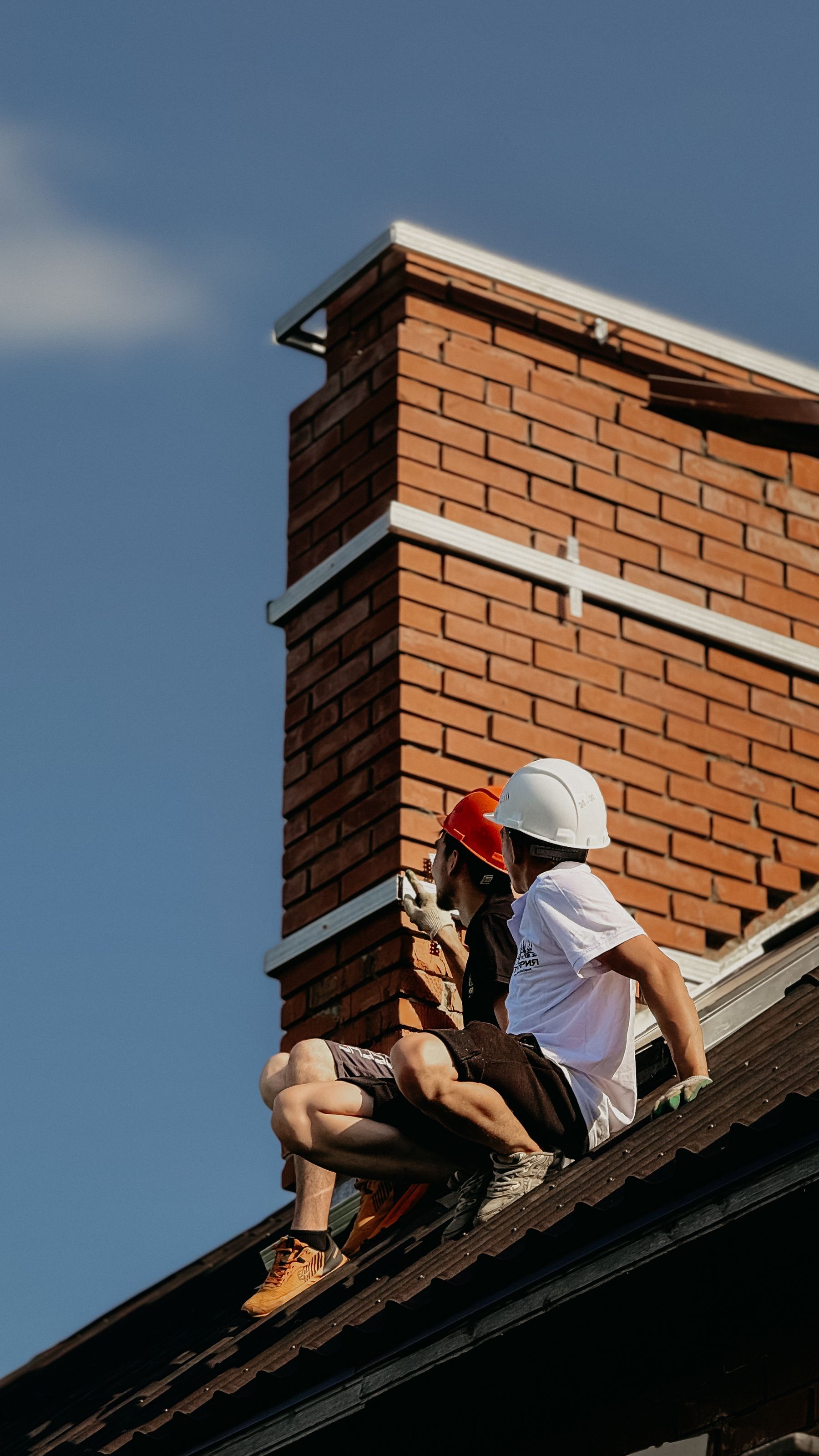
Chimney And Fireplace Services — Chimney flashing is one of the most common leak points on a roof. Roofing projects that include chimney-area work may connect to broader chimney masonry, crown, or cap scope.
Siding Services — Roof-to-wall flashing connects the roofing system to the siding at every sidewall and dormer transition. When roofing work reveals failed sidewall flashing, the siding at those transitions may need to be addressed at the same time.
Window And Door Services — Skylight and dormer window transitions are flashing-intensive areas of the roof. Window and door work that involves these openings often coordinates with roofing scope.
Masonry Services — Brick chimneys, stone veneer at rooflines, and masonry-to-roof transitions involve both roofing flashing and masonry work. When chimney masonry is deteriorating alongside roof flashing failure, both scopes may need to be addressed together.
Concrete Services — Concrete flatwork, foundations, and stoops adjacent to the roofline may be affected by water management changes during a roofing project, particularly when downspout routing or splash pad locations change.
Deck And Patio Services — Decks and patios adjacent to the home often sit below the roofline, and their position affects water runoff, gutter discharge, and access during roofing work.
Deck Services — Standalone deck construction and repair, including ledger board connections that interface with the home's wall and roofing system.
Fence Services — Fencing near the home perimeter may affect roofing crew access and staging during full roof replacement projects.
Retaining Wall Services — Grade changes and retaining walls near the foundation affect water drainage patterns that interact with roof runoff and gutter discharge.
Asphalt And Paving Services — Driveways and paved surfaces adjacent to the home are used for material staging and dumpster placement during roofing projects.
Irrigation And Sprinkler Services — Sprinkler heads and irrigation lines near the foundation may need protection or temporary adjustment during roofing tear-off and cleanup.
All Services — The full services directory for comparing roofing with other contractor-led service families.
New Construction Projects — Roofing scope as part of a new home build, addition, or commercial construction project.
Interior Remodeling And Finish Services — Interior ceiling, drywall, and paint damage caused by long-running roof leaks may need attention after the roofing work is completed.
Restoration, Waterproofing, And Structural Services — Water intrusion from roofing failures can cause structural and moisture damage that extends beyond the roofing scope into restoration and waterproofing work.
Frequently Asked Questions
How do you tell whether a roof should be repaired or replaced?
The decision depends on how widespread the damage is, the age of the roof, and whether the problems are isolated or systemic. A roof under 15 years old with damage limited to a specific area — a few missing shingles from wind, a localized flashing failure, a single leaking pipe boot — is usually a repair candidate if the surrounding system is still performing. When deterioration is showing up in multiple locations at the same time, the roof is past 20 years, prior patches are no longer holding, or the decking is damaged across broad areas, the scope has typically moved past what a practical repair can address. An inspection documents the actual conditions so the repair-versus-replacement decision is based on evidence, not assumptions.
What usually changes a roofing quote the most?
Roof pitch and complexity are typically the two biggest variables after size. A steep roof requires safety harnesses, roof jacks, and slower production on every phase — tear-off, underlayment, and shingle installation all take longer. A complex roof with many valleys, dormers, skylights, chimneys, and hip lines requires more flashing, more cutting, and more detail work than a simple gable. After pitch and complexity, the next biggest variable is decking condition, because damaged decking discovered after tear-off adds material and labor that was not visible from the surface. The number of existing layers to remove, the material type, and whether ventilation corrections are needed all factor in from there.
What happens if the decking is damaged when the old roof comes off?
Damaged decking is replaced before any new roofing material goes on. The deck is the structural surface that everything else attaches to — if it is soft, delaminated, rotted, or water-stained, new shingles installed over it will not perform and will not last. After tear-off, the crew inspects the full deck surface and marks any sections that need replacement. Those sections are cut out and replaced with new plywood or OSB that matches the existing thickness and is properly fastened to the roof framing. Decking repair is a normal part of the reroof process, especially on older roofs where leaks have gone undetected for years.
Why do roof problems often start at flashing and penetrations rather than the shingle field?
Flashing and penetrations are transition points — places where the flat shingle field meets a vertical surface, a change in direction, or an opening through the roof. Every chimney, skylight, plumbing vent, exhaust fan, valley, sidewall, and roof-to-wall intersection requires its own flashing detail to direct water away from the joint. These details involve more seams, more material interfaces, and more exposure to thermal movement than the shingle field. Over time, sealant dries out, metal corrodes, pipe boots crack, and flashing lifts — creating openings that let water in even while the surrounding shingles still look intact from the ground.
Does Cornerstone handle the full roofing system, or just the shingles?
Cornerstone's roofing scope covers the full layered system — decking repair, underlayment, ice and water shield, flashing, ventilation, drip edge, starter strips, pipe boots, shingles, and ridge caps. Roofing is not just the visible surface. The layers underneath determine whether the roof keeps water out and how long the system lasts. The specific scope for any project — which layers are addressed, which components are replaced, and how the work coordinates with other trades — is established during the estimate conversation.
Start a Roofing Estimate
If the roof is leaking, showing storm damage, approaching the end of its service life, or needs an inspection to determine the right next step, we can help scope the project and schedule the right estimate path.
- Call or text: 801-389-3161
- Email: info@cornerstoneconstructionremodeling.com
- Or use the contact page to describe the scope, share photos, and include your address so we can confirm service-area fit.